
 Available in US
Content

Why I treat home ice as a price input, not a tip
Walk into any NHL arena and you’ll feel the home advantage before you see it on the scoreboard. The crowd noise, the routine of last change, the home dressing-room rituals. None of that goes unmeasured anymore. NHL home favourites finished 2024-25 with a 64.1% straight-up win rate, posting a 555-231-54-26 record across the regular season. It’s the highest home-favourite hit rate among the four major North American leagues and an edge that operators have to bake into every opening line.
The mistake punters make is treating home ice as a free signal. By the time the line is posted, the sportsbook has already priced in the home premium — typically 0.10 to 0.15 in decimal odds. What matters is whether the line has fully priced it, partially priced it, or over-priced it relative to the actual matchup. That’s the question this piece answers.
The 64% NHL pattern, decoded
The 64.1% straight-up win rate for home favourites is the headline number, but the texture inside it is what makes the metric useful. Stronger home favourites (priced shorter than -200) win at around 71%; mid-range home favourites (-130 to -180) hit at about 61%; pick-em home sides win 53-55%. That’s a steep curve, and it tells you the home edge isn’t constant across the price range.
The puck-line story is the more interesting one. Home favourites covered -1.5 only 41.8% of the time in 2024-25. That’s the number that catches sharp punters. The home team wins the game, but doesn’t win by two or more in 58% of fixtures. The reason is simple — late empty-net goals don’t always materialise, one-goal wins are common in a low-scoring sport, and the home favourite typically tightens up defensively once they have the lead.

So the home favourite at -1.5 is structurally a coin flip with the operator’s juice working against you. Unless you have a specific case for the match producing a multi-goal margin (a tired opponent, a weak backup goalie, a top scorer matchup the road team can’t counter), the -1.5 home favourite price is generally avoidable. Better to take the moneyline at shorter odds and accept the higher hit rate.
One pattern that consistently shows positive return: home favourites at -120 to -150 against road teams on the second leg of a back-to-back. The home side’s actual win rate in that subset climbs to 65-67%, while the implied probability of the price hovers around 55-60%. The gap is the bet.
Last change as a tactical edge, not just a comfort
The most under-discussed mechanic of home advantage is last change. The home coach gets to send out his line after seeing the road team’s line. Over 60 minutes, that’s roughly 30-35 line decisions where the home bench has full information and the visiting bench is reacting blind.
In high-leverage moments — late offensive-zone faceoffs, post-icing situations, power-play units — last change is decisive. A home coach can put his shutdown pairing against the road team’s top line, defensively secure the matchup, and force the visiting team to either accept the unfavourable matchup or burn a timeout. Across an 82-game season, that small per-shift edge accumulates into roughly 4-5 percentage points of additional home win rate.

I track last-change-driven matchups for specific pairings. When a team like Florida, Vegas or Carolina (all strong in defensive structure) hosts a team with a single dominant top line and weak depth, the last-change leverage is at its peak. The market under-prices these matchups consistently. The opposite case — a home team with weak depth hosting a balanced four-line opponent — produces home favourites that often miss the cover even when they win, because the home coach can’t always tilt the matchups favourably without burning his stars in defensive minutes.
Home favourite puck-line cover rate, and where the value lives
Underdogs covered +1.5 in 60% of NHL games in 2024-25. That’s the mirror image of the home-favourite cover problem. If home favourites cover -1.5 only 41.8% of the time, then underdogs are covering +1.5 close to 60% — and the road underdog at +1.5 (typically priced around -180 to -210) is one of the more reliable structural bets in the market.
The home favourite puck-line is the trap. Operators know punters chase short-priced moneylines (-200, -250) and offer the puck-line as a “value upgrade” — bet on the same team but get +130 or +150 instead. The hit rate doesn’t justify it. The implied probability of -1.5 at +130 is 43.5%; the actual cover rate is 41.8%. The price is fair-to-slightly-against.
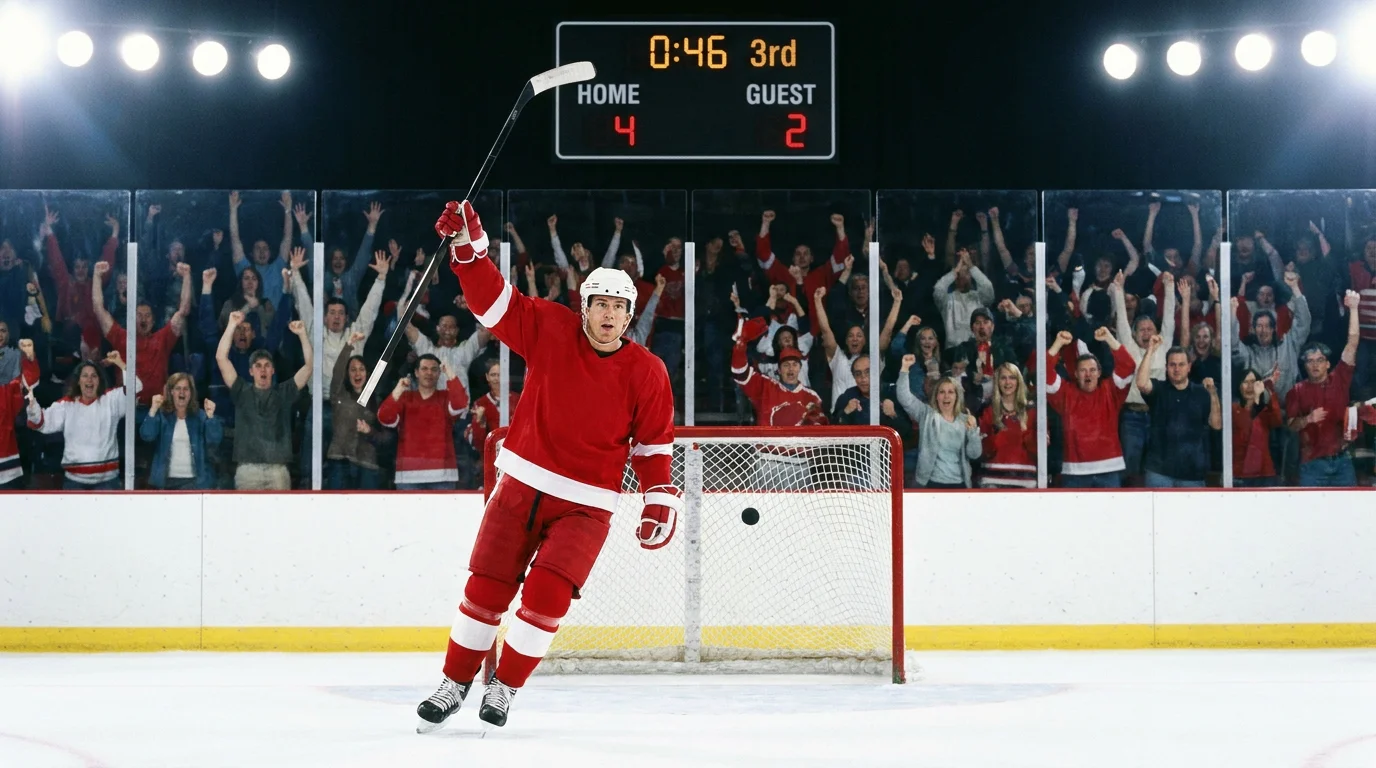
The exceptions are narrow but worth knowing. Home favourites against tired road opponents (back-to-back travellers, fourth game in six nights) cover -1.5 at around 47-49%. Home favourites against teams starting weaker backup goaltenders cover at 46-48%. Home favourites in matchups with high totals (7+) cover at 45-46%, because higher-scoring games produce wider margins more often. None of these subsets reach the 50% level needed to be a pure-value bet at +130, but they push the line into a reasonable take when the price drifts to +140 or +150.
EIHL home edge, amplified by venue and travel
EIHL home advantage runs sharper than NHL home advantage, for two structural reasons. First, EIHL venues are smaller and louder — Cardiff’s Vindico Arena and Sheffield’s Utilita Arena both push attendance toward saturation on big nights, and the crowd noise relative to capacity is higher than in most NHL barns. Second, EIHL travel is genuinely difficult for visiting teams. Belfast Giants require a flight, Cardiff Devils sit at the geographic edge of the league, and the Scottish-Welsh-English fixture rotations produce real bus and air fatigue.
Cardiff Devils have posted a home win rate above 70% at Vindico Arena across recent seasons, well above any NHL home team’s number. Sheffield Steelers averaged 7,978 attendance in 2024/25, with a peak of 9,638 on Boxing Day against Nottingham. Those crowds matter — Steelers’ home win rate on Boxing Day fixtures runs above their season home rate by a measurable margin, and the line typically reflects only a portion of the actual edge.

The EIHL betting market is also thinner. Operators offer fewer EIHL markets than NHL markets, and the lines they do post are slower to move on injury or roster news. That creates timing edges for UK punters watching team news. A confirmed first-line scratch for a visiting team going to Cardiff or Belfast might not be reflected in the price for hours; a sharp punter takes the home moneyline before the line moves and books a CLV gain regardless of the result.
How playoff home ice changes the math
Adrian Horton at ESPN BET has been clear about the playoff shift: NHL Playoffs run on smaller margins between even the best and worst teams. The implication for home advantage is direct. Regular-season home favourite win rates of 64.1% don’t carry into the playoffs intact. Playoff home favourites in 2024-25 won approximately 56-58% of the time — a six-to-eight-point drop from the regular-season baseline.
The reason is partly competitive — playoff fields are tighter, and the worst teams don’t make the bracket. But the bigger reason is the goaltender effect. A hot goalie can flip a series regardless of home ice, and home-team scorers tend to tighten up under playoff pressure. The market knows this, but applies the discount unevenly. Game 1s often get a full regular-season-style home premium that doesn’t survive the series; Game 5s and Game 7s often get a discount that over-corrects, because the home team has both the crowd and the win-or-go-home incentive.

For UK punters, the cleanest playoff home-edge play is the home dog at +120 to +180 — the team that’s lost two of the first three games and is now at home for a must-win Game 4. These dogs have historically won at around 48-52%, a rate that justifies the price across a long sample. The textbook UK case study for the home-edge mechanic at club level is Cardiff Devils as the textbook home-edge case in the EIHL, where the venue and the schedule combine to magnify the home premium.
Frequently asked questions
The questions I hear most when home ice comes up tend to focus on the EIHL-NHL gap and the playoff shift. Both are reasonable points of confusion.

Why does EIHL home edge feel bigger than NHL home edge?
EIHL home advantage runs structurally higher than NHL home advantage because venues are smaller and louder relative to attendance, travel between EIHL cities is genuinely difficult (Belfast requires a flight, Cardiff and Scotland sit at geographic edges), and the league has fewer line-shopping operators competing on the markets, which means inefficiencies persist longer. Cardiff Devils’ home win rate above 70% at Vindico Arena sits well above any NHL home team’s regular-season number. The fixtures that compound the effect — Boxing Day in Sheffield, weekend doubles in Belfast — show the largest home premiums and the slowest line corrections.
Does home ice advantage shrink in the NHL playoffs?
Yes. Regular-season NHL home favourites win at 64.1% straight up. Playoff home favourites in 2024-25 won approximately 56-58% of the time — a six-to-eight-point drop. The shrinkage reflects two things: playoff fields are tighter, with the worst teams missing the bracket entirely, and hot goaltender play can flip series regardless of venue. The market applies the discount unevenly, often pricing Game 1s with a full regular-season home premium that doesn’t survive the rest of the series, while Game 5 and Game 7 home favourites sometimes get an over-correction discount where home-team must-win incentive isn’t fully priced.
