
 Available in US
Content
- What changes when you watch the NHL from a UK living room
- The 82-game shape and what the money has to do with it
- Back-to-backs and the 40 per cent trap
- The starting goalie as the anchor of every bet
- Home ice, road dogs and the puck-line skew
- Why totals settled at 6.1 and what that does to your card
- Divisional rivalries and the rivalry overlay
- How late February prices in playoff seeding
- Kalshi, Polymarket and the new second screen
- Questions UK punters keep sending me
- Where I keep finding the NHL edge
What changes when you watch the NHL from a UK living room
If you place an NHL bet from Britain, the maths on your slip looks subtly different from the version printed in any American strategy guide. The puck drops in Las Vegas while you’re brushing your teeth at midnight; the second period of an East Coast 7 PM game lines up with 2 AM in London; and the operator quoting you 11/10 on Florida tomorrow morning has a different funnel of customers, a different incentive structure, and a regulator with very specific opinions about how that price is advertised. After seven years modelling NHL value lines from this side of the Atlantic, I keep coming back to one truth — the league is the same, but the angle isn’t.
Adrian Horton, who runs North American sports trading at ESPN BET, summed up the trickiest part of all this by pointing out the NHL Playoffs have smaller margins between even the best and worst teams than punters expect. That’s true for the regular season too — just less obvious. Eighty-two games paper over a lot of variance, and last season Connor McDavid still finished on 138 points with 48 goals and 90 assists while Nathan MacKinnon piled up 53 goals. Star concentration warps how the market reads matchups, even when the underlying form chart is messy.
What follows is the manual I actually use. Eight strategy layers — schedule, goaltending, home and road, totals, divisional play, late regular season into playoffs, and the new prediction-market overlay — and then a tight FAQ. No US-style “experts say” filler, no fictional book rankings, no list of operators. Just the calls I make on my own card every week.
The 82-game shape and what the money has to do with it
The NHL is now a $2.2 billion-per-club business. That’s the average team valuation in 2025 — up roughly 15 per cent year on year — and the Toronto Maple Leafs sit at the top of the league at $4.3 billion. Gary Bettman has openly priced the next expansion seat at a $2 billion minimum entry fee. None of this matters to a goalie on Tuesday night. But it matters intensely to how the league schedules itself, and the schedule is what a punter actually has to read.
Eighty-two regular-season games, then sixteen-team playoffs, then the Cup Final. The calendar runs from early October to mid-June. Owners want every arena filling itself eight or nine times a month, which produces dense scheduling — clubs travel cross-timezone constantly, and almost every team plays back-to-back nights at least once a week through the middle of the season. The Florida Panthers, fresh off back-to-back Stanley Cups in 2024 and 2025 with the second sealed against Edmonton in a six-game final, know the schedule’s structural cruelty better than anyone. They’ve been built specifically to absorb travel and tight matchups, with four-line depth that holds up on a third-night-in-five.

For a UK punter the implications cascade. Heavy-travel weeks for a specific club are softer-line weeks. When a Western Conference team plays in Boston on Tuesday and lands in Tampa for a Wednesday faceoff, the market often prices that road second-night closer to a coin flip than it ought to. The home favourite gets bid up, the road dog drifts. Three or four times a month, one of those drifts is wider than the underlying matchup justifies — and that’s where I park my unit.
The same goes for the late-March stretch when contenders are openly resting starters. You watch which clubs are tanking minutes, not chasing wins, and you trade out of any moneyline on their card until late April. The money behind the league has made it more profitable to peak in May than to win the President’s Trophy, and the smart franchises now play accordingly. That single shift has changed how the last six weeks of the regular season ought to be bet, and it’s a shift that most US-style strategy guides still haven’t caught up with.
Back-to-backs and the 40 per cent trap
Forty per cent. That’s the straight-up win rate of teams playing the second game of a back-to-back set since the 2023 NHL season — a 205-309 record across roughly five hundred games. If you read no other number in this manual, read that one. Sportsbooks know it, but they don’t always price it cleanly, because the public side of every popular team backs the same favourites whether they’re rested or running on fumes.
Here’s how the play actually works on my desk. I open the morning slate and pull out every game where one side is on a second night, especially if the road squad flew overnight. Then I check whether the home side has had two clear days off (the strongest setup) or whether they’re also coming off a recent game. The cleanest setup — and the most reliable fade I’ve found in seven years — is “road team second night versus rested home favourite”. The market typically prices the rested home side at around minus 200 in those spots; the long-run win rate doesn’t justify the juice on the favourite, and the plus-1.5 puck line on the visitor pays out well above implied probability.

The micro-formula I use: when a favourite priced at minus 200 is the first half of a back-to-back pair, so they’re playing fresh tonight but fatigued tomorrow, the market overcorrects on tomorrow’s matchup by roughly fifteen to twenty per cent relative to where a true power rating would set it. That’s not a tip you act on once. It’s a calibration tool you apply to every Monday-and-Tuesday or Friday-and-Saturday combo across the season. Run it across fifty bets and the edge is real.
One caveat. The 40 per cent number is the league-wide average; some teams handle the second night better than others. Florida, Dallas and Carolina have all built rosters that absorb the strain. Mid-tier clubs with thin depth — naming no one because rosters change every transfer window — collapse far below the average. If you want the full mechanical breakdown of how to filter these by team, depth and travel direction, I’ve written a deep dive on the 40 per cent SU back-to-back pattern that walks through the model in detail.
The starting goalie as the anchor of every bet
In 2024-25, NHL goalies posted the lowest collective save percentage in three decades. Three decades. The league average dipped below the .900 line that used to be a vague badge of starting-quality goaltending, and the slide has continued into 2025-26. That single fact rewires how a hockey punter has to think.
Martin Biron, the former NHL goalie turned analyst, put the cause more bluntly than anyone in the league office wanted to hear. All of the auditing the league is now doing on shots, he said, honestly stems from gambling — people don’t want to lose their bets if there was a shot that was missing the net or whatever, so the official scorers tightened up, marginal shots no longer count, and SV per cent on the same goalie goes down even when the actual play hasn’t changed. Jake Oettinger, the Dallas starter, made the same point from the player side. They just take shots away that are shots on goal, he said. There are probably three a game. Multiply that by fifty games and that’s like having five more shutouts that they’re taking away.

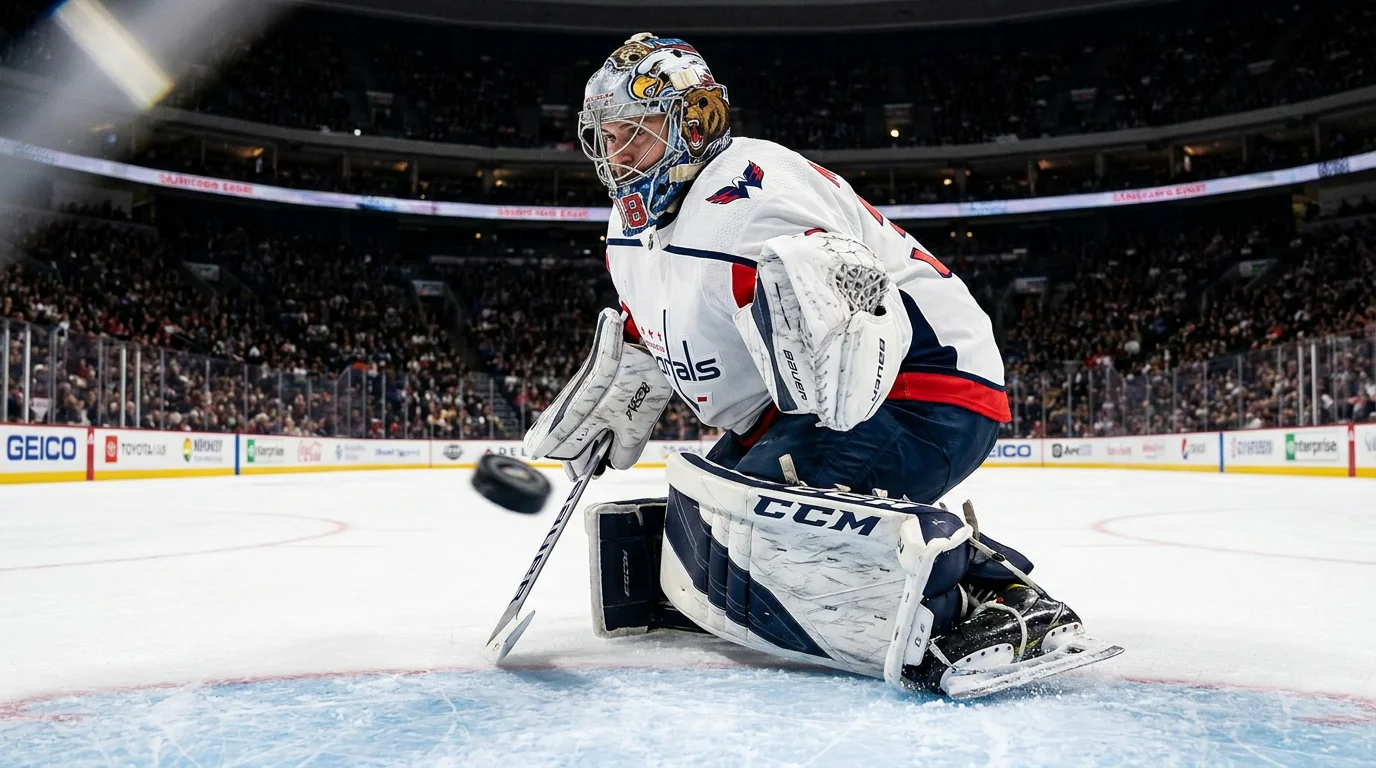
So when I look at a goalie’s save percentage in 2025-26, I treat the number as a moving target. The first thing I do — every single matchup, no exceptions — is verify the confirmed starter no more than two hours before puck drop. Lineup pages on club Twitter accounts, the morning skate report from beat reporters, the warmup confirmation. Any of these beats acting on yesterday’s projection. If the confirmed name is the backup, I cancel my pre-match position regardless of how good my read on the matchup was. A backup behind a top-six attacking team can blow up a moneyline I thought was a steal.
The second filter is rolling form, not season average. Ten-game SV per cent is the window I work in; anything older has too much noise from injuries, line changes and travel. The third filter is high-danger save percentage, which Natural Stat Trick publishes daily and which strips out the easy outside shots that the scorers might or might not have given a starter on any given night. When a starter is sitting on a .910 SV per cent but a .780 high-danger SV per cent, the market price of his moneyline is built on a lie, and you can usually find his team’s puck-line dog at very fair value.
Goaltending is also why I don’t bet shots-on-goal props with any size. Oettinger’s three-shots-a-game point is real money on those markets, and I won’t take a position on a metric that the league has admitted in public it’s actively recalibrating. Player-prop punters who haven’t read what Biron said are betting yesterday’s measurement scheme.
Home ice, road dogs and the puck-line skew
Two numbers from 2024-25 sit on the wall above my desk. Home favourites won 64.1 per cent of their games straight up. Home favourites covered the minus-1.5 puck line in only 41.8 per cent. That gap is the whole story of NHL betting from a value perspective.

Look at it this way. A home favourite priced at minus 200 implies a 66.7 per cent win probability. Their actual SU rate of 64.1 per cent is right on top of that — the market knows who’s going to win the game roughly as often as the team actually does. The asymmetry only appears when you ask the next question: by how many goals? Underdogs covered the plus-1.5 puck line about 60 per cent of the time last season. Home favourites at minus-1.5 covered just under 42 per cent. Same matchups, same money flowing in, but the granular ask changes the prices completely.
What this means practically. Home favourites in the minus-180 to minus-250 range are systematically overvalued at minus-1.5. The market is selling you “they’ll win comfortably” at a price that implies it happens more than half the time, when the data says it happens four times in ten. Conversely, road plus-1.5 dogs in the same matchups print at break-even or better across a sample of fifty bets. That’s not a hot tip; it’s the structural shape of NHL scorelines. Empty-net goals don’t bail out the minus-1.5 ticket nearly as often as casual punters assume — most one-goal leads stay one-goal leads.
I don’t bet every plus-1.5 dog. The filter is whether the matchup itself is close — power ratings within a goal of each other, both starters confirmed, no clean rest mismatch. When those boxes tick, plus-1.5 on the road is one of the only fixed-formula plays in NHL markets that has held over multiple seasons. When they don’t tick — when you’ve got a true blowout matchup — the gap closes and the play disappears. Read the matchup first, then read the price.
Why totals settled at 6.1 and what that does to your card
Average goals per game in the NHL last season: 6.1. The previous season was higher. The market totals — 6 or 6.5 most nights — moved with it, but not by enough. Unders on the 6.5 total cashed 57 per cent of the time, up from 53 per cent the season before. That’s the betting trend that’s quietly reshaping every NHL slate in 2025-26.

Three things drove the drop. Referees called penalties more tightly in the first period, which compressed the early shooting frenzy. The shots-on-goal audit Biron mentioned shaved tail shots off the books, which dragged some long-shot goals off the record. And teams kept refining their structural game — neutral-zone forecheck rotations, layered defence, low-event coaching philosophies that the Florida-Edmonton Cup Final showcased at its most stifling. The on-ice product is denser than it was five years ago. Goals come later in matches and from tighter looks.
For a punter the implication is straightforward. When a total opens at 6.5, the historical default is to lean Under unless something specific argues the other way. The “something specific” is mostly goaltending. Two backups starting against each other is the cleanest Over signal — Biron and Oettinger’s point about scoring tightening on starters cuts the other way when the goalies aren’t NHL-quality. A confirmed starter on each side, both sitting around league-average SV per cent, and the Under reads even sharper than the 57 per cent baseline suggests.
Team totals do the same work with less variance. If you’ve read the matchup as a low-event game, the team-total Under on the projected losing side is often a better-priced version of the game Under. I also like the “no goal in the first five minutes” prop when totals are 5.5 or 6. The early-period tightening shows up cleanly in that window, and a lot of operators don’t price it sharply enough. None of these are home-run picks; they’re grinding flat plays that build a season’s roll without spectacular variance.
Divisional rivalries and the rivalry overlay
The first round of the NHL Playoffs is divisional. That single structural fact reshapes the regular season’s last six weeks. Atlantic, Metropolitan, Central and Pacific are the four divisions, and inside each one teams play each other roughly four times a year. By the time the playoffs roll round, the eventual first-round opponents have already played each other into the ground. They know each other’s lines, special teams habits, dump-in tendencies. Florida winning consecutive Stanley Cups out of the Atlantic across 2024 and 2025 wasn’t a fluke; they spent each regular season getting reps against the same Tampa, Toronto and Boston groups they’d see in April and May.

For betting, that means three things. One — divisional games in March carry sharper edges because the lineup variables are minimal; both clubs have been doing this matchup four times a year, so the market is more efficient on these games and I shop hardest for line value while refusing to bet stale numbers. Two — the last five games of the regular season between teams who are likely first-round opponents are useful tape for live-betting the playoffs, but I generally don’t bet outrights based on those games because both sides are managing minutes. Three — rivalries that aren’t divisional, the cross-conference games people get excited about, are overpriced through the season because public money piles on. A Toronto-Montréal Saturday game has more chalk than the matchup deserves; the lesser-noticed Florida-Tampa midweek has tighter, fairer prices.
The trap to avoid: thinking that “rivalry games” are automatically high-event blowouts. They’re often the opposite. Two divisional clubs in the last fortnight of the season frequently play measured, structurally tight matches that go Under with no one expecting it. Watch the seeding implications, not the noise. The cleanest divisional bet I make through March is on Unders in matchups where both sides have already clinched a playoff spot and are saving their best lines for the postseason. Those games consistently come in below the projected total because the market reads them as “stars on, fireworks coming”, but the coaching staff is running a controlled simulation. The lines tell you to back the show. The bench tells you to fade it.
How late February prices in playoff seeding
By late February, the standings tell their own story. Three or four teams in each conference have effectively booked their playoff seats; another half-dozen are scrapping for the last two wildcards; and the rest are watching the trade deadline. That last bit is the most actionable bit for the regular-season punter, because the market typically takes a week to adjust to roster moves, and the divisional standings start moving people into matchups they didn’t expect six weeks earlier.
Adrian Horton’s line about smaller margins between even the best and worst teams reads as a warning here. Even the team you’ve written off after a January slump can run a six-game heater in late March if the trade deadline brings them a healthy goalie or a top-six winger. Prices on these clubs lag the on-ice change by a fortnight, sometimes longer, because pre-match prediction models — the kind operators feed into their pricing engines — weight ten-week recent form heavily. A roster that’s been together for ten days hasn’t generated that sample yet.
The flip side: contenders who’ve already clinched start managing workload. Stars sit on the second night of back-to-backs. Goalies get scheduled rests. The Florida-style “we’re peaking for May, not March” approach is now standard for top seeds. Their March moneylines go through a quiet decline that almost no public-money punter follows because the league standings still say “first seed”. Backing the underdog against a clinched team in late March is one of the cleanest, most ignored angles in regular-season NHL betting.
Kalshi, Polymarket and the new second screen
The NHL signed deals with prediction-market platforms Kalshi and Polymarket — the first major North American league to do so. The mechanics are different from a sportsbook. Prediction markets settle yes-or-no contracts on outcomes, with prices driven by trader-versus-trader liquidity rather than a bookmaker’s overround. Gary Bettman, who’s never sounded particularly worried about match-fixing in his league, said he doesn’t believe the game is susceptible in the way that some others might be — you can’t really get away with that kind of cheating anymore, he argued. He’s not wrong about the on-ice integrity. He’s also not wrong that the deal opens a new pricing window for serious punters.
What it means in practice for the UK reader: I now keep Polymarket open on a second screen for outright series prices during the playoffs. The exchange-style price discovery often moves earlier than UK operators’ fixed prices, and the gap occasionally lets me bet a Conference Final winner at a UK book before the sportsbook line catches up to the prediction-market signal. It’s not a daily edge — most days the prices agree — but two or three times in a playoff run, the asymmetry is large enough to act on. I don’t bet on prediction markets directly from the UK because the regulatory status is unsettled enough that I treat them as a price feed only, but as a second screen they’ve earned a spot in my workflow this season.
Questions UK punters keep sending me
How does the NHL schedule create back-to-back betting edges?
The compressed 82-game schedule forces almost every team into back-to-back nights at least once a week, with travel direction and rest mismatch as the variables. Teams playing the second night of a back-to-back set have won straight up only 40 per cent of the time since 2023, but markets often price them closer to a coin flip when the matchup looks even on paper. The cleanest play is fading a rested home favourite priced at around minus 200 against a road team on a second night. Bigger fade edges appear when the road team has also flown more than one timezone overnight.
Should I bet NHL preseason games at all?
No. Preseason lineups are full of players auditioning for jobs, coaching staff are testing systems, and starting goaltenders rarely play more than two periods. Lines are wider, liquidity is thinner, and the data points you’d want to act on simply don’t exist yet. I save my preseason research entirely for line-up tracking rather than betting — it’s useful intelligence for the first month of the regular season, but not wagerable in itself.
What’s the difference between sportsbook SU and ATS records in the NHL?
SU is straight-up — who actually wins, including overtime and shootout. ATS is against the spread, and in hockey that almost always means the puck line at plus or minus 1.5 goals. A team can have a strong SU record and a weak ATS record if they keep winning narrowly, which describes most NHL favourites. The two records together tell you more than either alone — a club winning consistently but failing to cover the spread is being overpriced by the market most nights.
How early should I place an NHL bet to capture closing-line value?
Earlier is usually better when you have a strong read on goaltending or rest mismatch — those edges close fast once confirmed starters get published. For totals and props that depend on lineup news, hold off until roughly two hours before puck drop so you can verify starters from the morning skate. Closing-line value is positive when your bet’s price was longer than the eventual closing price; track it across fifty bets to see if your timing is actually working.
Where I keep finding the NHL edge
The NHL season from a UK desk is a long game played in unsocial hours. Back-to-backs, confirmed starters, the road-dog puck line, the Under in low-event matchups, divisional Marches when the contenders are saving their best for May — these are the patterns that pay flat staking and patience. Stars matter less than the schedule and the scorer’s table. McDavid and MacKinnon will pile up points; the value lives below them. I’d rather catch a fair price on a road plus-1.5 at midnight than a hyped favourite at minus 200 in the afternoon, and seven seasons of tracking my own results says the maths agrees. Build a notebook of your own results, run it through the playoffs, and let the season do its work. The edges don’t shout. They just keep showing up if you keep looking.
