
 Available in US
Content
- The 53-goal scorer who scored in just 33 matches
- How the market actually sets anytime scorer prices
- The research checklist for top-six forwards
- Power play time is the multiplier most punters underrate
- EIHL anytime scorer markets are a different animal
- Stake sizing rules for variance-heavy scorer markets
- Frequently asked questions

The 53-goal scorer who scored in just 33 matches
Nathan MacKinnon finished 2025-26 with 53 goals. That’s elite production by any measure. Yet across his 82 matches, he scored in only around 40 of them, meaning a punter taking him every night as anytime goal scorer was wrong more than half the time. The reason: scoring is concentrated. MacKinnon had nights with two goals, three goals, the occasional hat-trick, and a long line of zeros in between.
That’s the whole structural problem of the anytime scorer market. Even the league’s most dangerous forwards score in roughly 50-60% of their matches in a strong season. The market knows this. Prices reflect it. So the question isn’t whether McDavid or MacKinnon will score tonight — it’s whether the price you’re being offered correctly reflects the probability that he will. Most punters get this backwards. They pick the player first, then check the price, and pay no attention to whether the price is fair.
This guide flips it. Read the price first, then the matchup, then commit.
How the market actually sets anytime scorer prices
The first time I traded anytime scorer markets seriously, I spent an afternoon working backward from the prices to figure out what model the books were using. The shorthand I landed on: each player’s anytime scorer probability is roughly their season goal-per-game rate plus a matchup adjustment of plus or minus 5-8 percentage points.
Take a forward scoring 0.55 goals per match across the season. Base probability of scoring tonight: 42% (the math runs through a Poisson distribution, but 42% is the working approximation). At 42%, the fair price is 2.38. The market typically opens that player at 2.50 or 2.60, which builds in a small overround on each side. That’s roughly a 5% margin on the scorer line, before any matchup adjustment.
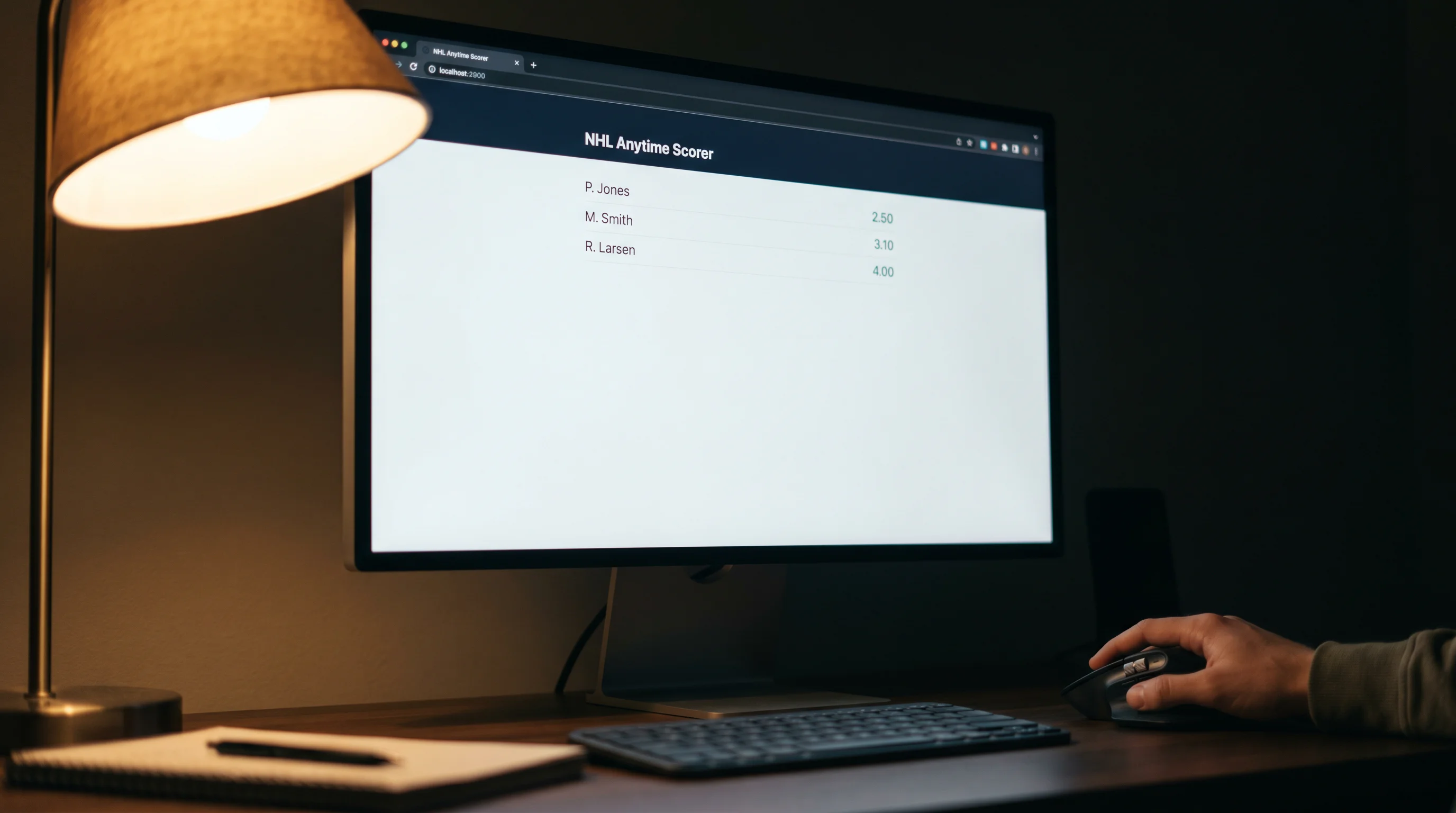
Top-six forwards on strong offences usually price between 2.00 and 3.00. A 50-goal scorer in a favourable matchup might briefly go to 1.85. The shortest anytime scorer prices I’ve seen on a healthy player were 1.65 on McDavid against the league’s worst defensive team. Defencemen who play heavy power-play minutes — top-pair offensive blueliners — usually price between 4.00 and 6.50. Fourth-line forwards and shut-down defencemen are typically 8.00 or longer.
UK operators open anytime scorer lines about two hours before face-off. That’s a narrow window for line shopping, and it’s the prime time for value to appear because not all operators set the same expected goals model. A 2.50 at one book might be 2.75 at another, and over a long sample those 0.25 gaps compound into your edge.
The research checklist for top-six forwards
Most published “anytime scorer tips” lists rely on season-long goals per game and recent form. That’s the floor of the analysis, not the ceiling. The actual workflow needs six inputs before any ticket goes on.
The first is rolling 10-game goal rate. Season averages are a six-month rolling average and lag actual form by weeks. I divide goals across the last 10 matches by 10 and compare to season average. If the rolling number is higher by more than 0.15 goals per game, the player is in a hot streak the market may not have caught up with.
The second is shot volume. A forward who’s recording 4-plus shots per match is generating more chances even when goals aren’t dropping yet. A 50-goal scorer averaging 53 goals — which MacKinnon hit in 2025-26 — typically takes 250-280 shots over a full season, or 3.5-4.5 per match. A forward with that shot rate but a low recent goal count is a regression-toward-the-mean candidate.
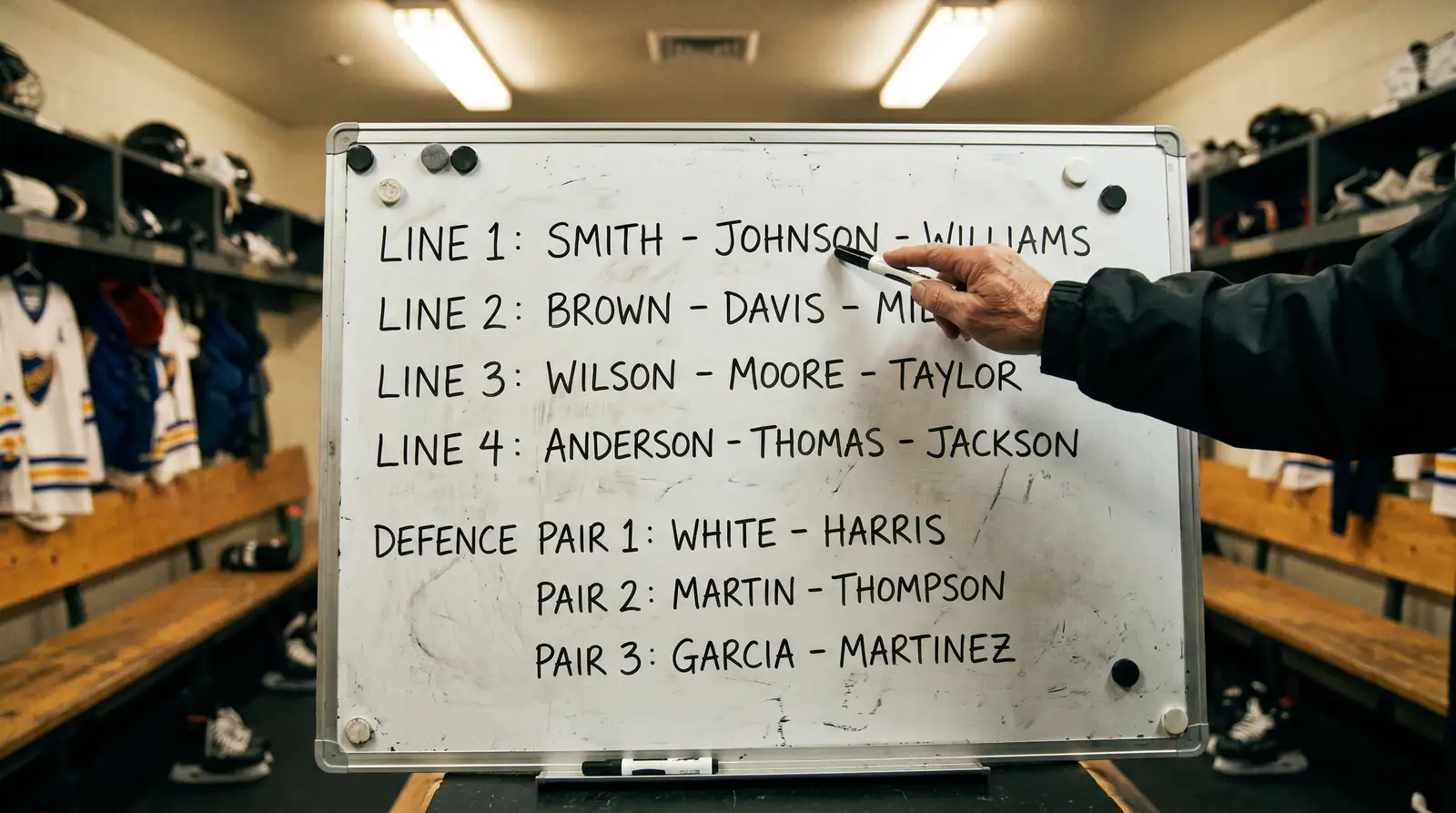
The third is line deployment. Top-six minutes per match, top-power-play unit minutes, and whether the coach has shuffled lines recently. A forward demoted to the third line for one match might still be in the scorer market at his usual price even though his ice time has dropped 20%.
The fourth is opponent matchup. Slot-defending defencemen, goaltender SV% on high-danger shots, opposing penalty kill rate. The fifth is venue. Some arenas are higher-scoring than others, but the effect is small (5-10% swing) and the home/road split matters more.
The sixth is news. Confirmed line combinations, healthy scratches, scratch announcements affecting power-play deployment. I read line news 45 minutes before face-off and adjust accordingly.
Power play time is the multiplier most punters underrate
If I had to pick one filter that moves anytime scorer probability more than the others, it’s power-play deployment. A top-unit power-play forward sees 2.5 to 3.5 minutes per match on the man advantage. A second-unit forward gets 1 to 1.5 minutes. That extra time generates real shots and real goal probability — typically 20-25% of a player’s goals come on the power play, but for a top-unit specialist that share can hit 40%.
The market knows this for headline names. McDavid’s anytime scorer price already includes his top-unit deployment. But for second-tier names — power-play specialists who don’t lead their teams in goals but score most of theirs on the man advantage — the market often prices them as if they’re regular five-on-five forwards. That’s the gap.
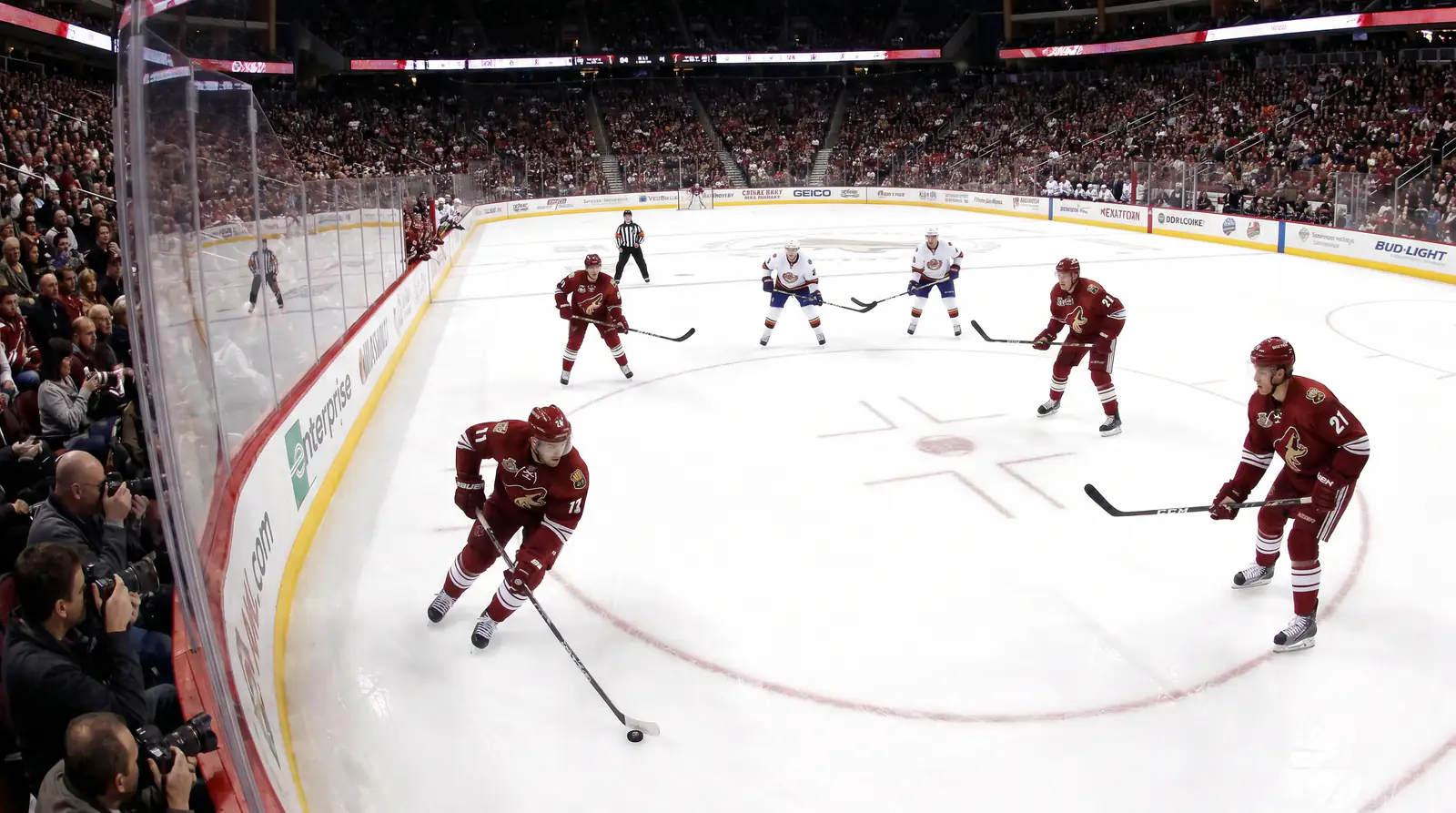
The filter I run: power-play goals divided by total goals over the last 30 matches. If a player’s PP-goal share is above 35%, treat his anytime scorer price as too low against opponents whose penalty rate is above league average. Conversely, if the matchup is against a top penalty kill, fade the same player even if his price looks fair.
The other context that matters: penalties drawn by his linemates. A forward playing on a line with a high-penalty-drawing centre will see more power-play opportunity, which compounds his expected goals. That signal is in the data but not in the line.
EIHL anytime scorer markets are a different animal
EIHL prop coverage is thinner than NHL, but where anytime scorer lines exist they offer something the NHL market doesn’t: bigger gaps in pricing between top snipers and the rest of the roster. Top EIHL goal scorers usually finish a season with 35 to 50 goals across roughly 60 matches — a much higher per-match rate than NHL forwards, because the league plays fewer games and the top forwards rack up substantial ice time.
The implication for anytime scorer prices: top EIHL forwards should price below 2.00 routinely, and frequently do. But UK books that list these markets sometimes set them at 2.20 or 2.40 because EIHL trading desks are smaller and slower. The line shopping window is wider than for NHL, but the markets are also less liquid — bet limits are tight, and lines can pull if you push too hard.

My approach to EIHL anytime scorer is conservative on stakes and aggressive on line shopping. The top snipers — typically the Belfast, Sheffield and Cardiff first-line forwards — are well-known to the books, and the soft side appears on second-line specialists rather than the headline names. For the contrast on a related variance market, the first scorer vs anytime scorer trade-off walks through where each market fits.
Stake sizing rules for variance-heavy scorer markets
Anytime scorer is a high-variance market, and stake sizing needs to reflect that. The math: a forward at 2.50 odds wins 40% of the time. A 25-bet sample at flat stakes will see runs of 7-8 consecutive losses purely from variance. Most punters can’t survive that emotionally and start chasing.
The rule I use: anytime scorer tickets get 50% of my standard moneyline stake. So if my unit is 1% of bankroll on a moneyline ticket, anytime scorer tickets are 0.5%. That smaller stake absorbs the variance without forcing emotional adjustments mid-season. The trade-off is slower bankroll growth, but the alternative — full-stake scorer tickets — is the most reliable way I know to blow up a bankroll inside three months.

Frequently asked questions

Should I bet anytime scorer on first-line wingers or centres?
Centres on the top line usually win face-offs, which gives them more direct shot attempts off the draw, but wingers attack from preferred shooting angles and tend to lead their lines in goals. Looking at the past three NHL seasons, top-line wingers slightly outperformed top-line centres as anytime scorers because power-play deployment shifted toward wing-side one-timers. The cleaner filter is total ice time plus power-play minutes — whichever player is getting more of both is the better scorer ticket on a given night.
How does power-play time impact anytime scorer odds?
A top-unit power-play forward gets 2.5-3.5 minutes per match on the man advantage versus 1-1.5 for the second unit. That gap typically converts to 20-25% of a player’s seasonal goals coming on the power play, and for top-unit specialists the share can hit 40%. The market reliably prices this for headline names but often misses it for second-tier power-play specialists. If a player’s PP-goal share over the last 30 matches is above 35% and the opponent has a high penalty rate, the anytime scorer price is usually too long.
