
 Available in US
Content

One night, ten games, one number
A Saturday in March looks the same on the NHL calendar every season. Twelve to fifteen matches stacked from 19:00 local in the Eastern time zone through to the second period of West Coast late games at 04:00 GMT. The Grand Salami market takes that entire slate, adds the goal totals together, and offers a single Over/Under on the total goals scored across every NHL match that day. On a 12-match Saturday, expect a line somewhere around 73.5. On a four-match Tuesday, more like 24.5. One ticket, one number, every match on the schedule.
NHL totals in 2024-25 averaged 6.1 goals per match. That arithmetic should make Grand Salami pricing predictable. On a 12-match slate, expected total: 73.2 goals. The line will sit at 73.5 or 74, and Under should print most nights, given that 57% of individual matches went Under 6.5 in 2024-25.
Except it doesn’t always work that way. Schedule density, back-to-back fatigue, blowouts and the structural way the market sets the line all distort the read. This is a market that rewards punters who read the slate before reading the price.
Which UK books offer it and how it settles
Grand Salami isn’t a default UK market. The handful of operators that list it tend to offer it only on the busiest NHL nights, typically Saturday and the occasional Wednesday with a fat schedule. Coverage is thinner than NHL puck line or moneyline. Most UK punters either won’t find it at all or will find it on just one or two operators.
The market posts roughly 24 hours before the first match of the slate. Lines move into the slate as injury news and starting goaltenders confirm. Major news — a top starter scratched, a key forward out — moves the Salami line by 0.5 to 1 goal. A blowout in the first match of the night can move the in-play Grand Salami line by 1.5 to 2 goals if any books still keep it open live.

Settlement rules vary by operator. The standard rule: the total goals across all scheduled matches, including overtime and shootout goals (a shootout-winning goal counts as one goal). Postponed matches usually void from the count, with the line and stake reduced proportionally — but read the operator’s rule book, because a few operators void the entire Grand Salami if any match in the slate is rescheduled.
The structural problem with the market: limits are tight. Most UK books cap Grand Salami stakes at £100-200, sometimes lower, because the line moves on a few key inputs and operators don’t want concentrated exposure.
The pricing math with 2024-25 averages
Here’s the working approach I use. Start with the average goals per match across recent NHL seasons. The 2024-25 number was 6.1. Apply that to the number of scheduled matches on the slate. That gives you the expected total.
On a 10-match Saturday, expected Salami total: 61. The line typically opens within 0.5 of that figure. If the line opens at 62.5, the market is implicitly pricing the slate as half a goal above season average. Why? Probably starting goaltenders skew weaker than average, or the matchups concentrate high-pace teams. If the line opens at 60.5, the slate skews defensive — multiple low-pace teams in play, strong starting goaltenders, or fatigue.

The 57% Under rate at 6.5 in 2024-25 created a structural lean toward Under at the slate level. On a 10-match slate where each match leans Under by 4 percentage points, the aggregate Under probability is closer to 53-54%. That’s a thin edge once juice is subtracted, but it’s a directional bias that held all season.
I’ve kept records on Grand Salami for three seasons. The pattern: Unders on slates of 8-12 matches outperformed Overs by 4-6 percentage points across the period. Slates of 4-6 matches were closer to coin-flip. The reason: smaller slates concentrate variance from individual matches. A 10-1 blowout in a four-match slate distorts the entire total. A 10-1 blowout in a 12-match slate gets absorbed by the law of large numbers.
One specific number worth tracking: the average margin of a Salami Under win. In 2024-25 the average winning Under hit by 4.5 goals. That’s a meaningful cushion. The average losing Under missed by 6.2 goals. Variance is large, but the central tendency favours Under in years like 2024-25.
The over-under bias depends on slate size
I treat Grand Salami slates in three buckets. Each behaves differently.
Small slates of 3-5 matches concentrate variance. One blowout — a 7-2, 8-1, even 9-0 result — distorts the entire Salami count. The line on small slates often opens with structural overround built in because operators don’t want concentrated exposure to a single outlier match. On these slates I usually pass.
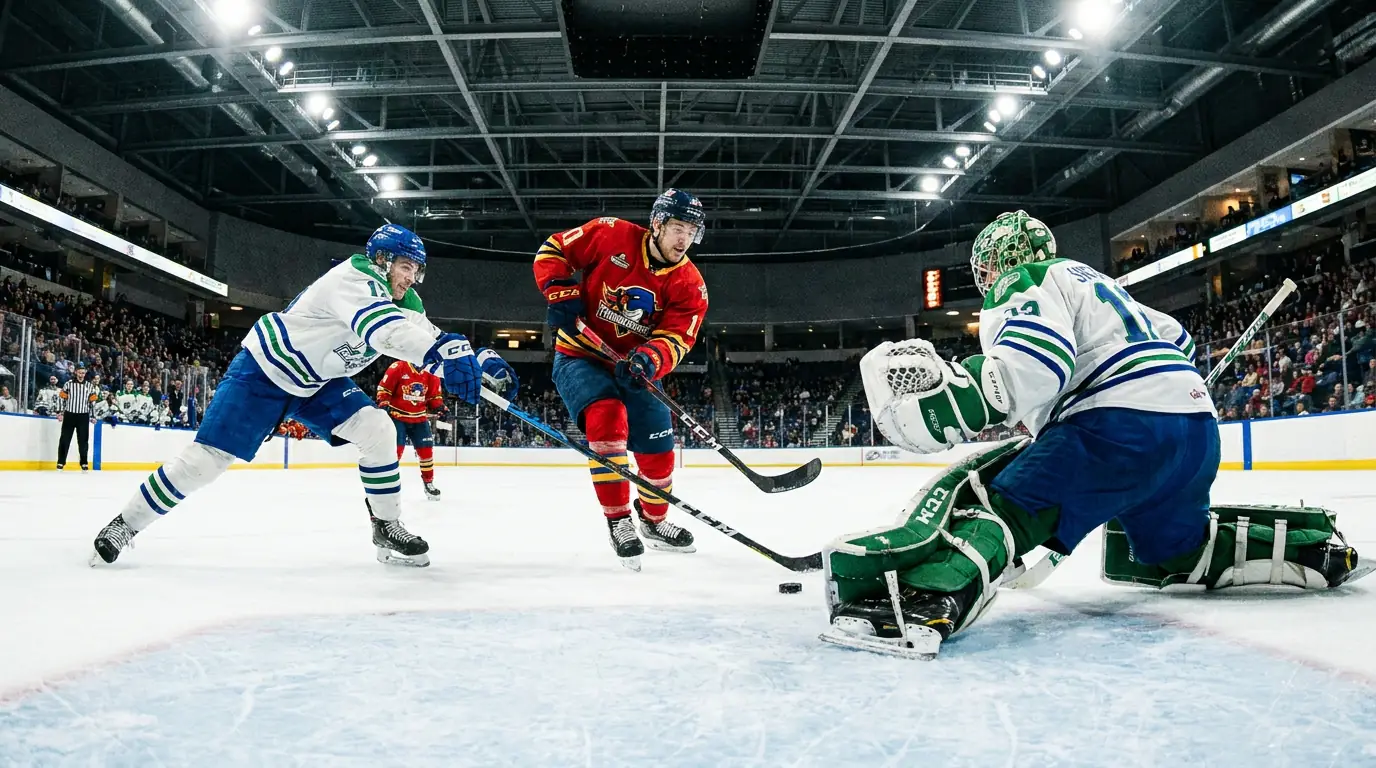
Medium slates of 6-9 matches sit in the middle. Some matches will hit the Over, some will hit the Under, but the slate average tends to converge toward the league mean. The historical bias toward Under that held in 2024-25 was strongest on this slate size — not enough variance from blowouts to disrupt the read, but enough matches to allow the central tendency to assert itself.
Large slates of 10-15 matches are the most read-friendly. With this many matches, individual variance washes out, and the slate result tends to track league average within 5-10%. The 6.1 goals-per-match number is reliable on these slates. The trade-off: the line is sharper, the overround is tighter, and the edge is thinner.
How back-to-back density bends the slate
Back-to-back fatigue is a known NHL pattern — second-leg teams go 205-309 SU, about 40%, since 2023. On Salami slates with multiple back-to-back teams playing the second leg, that pattern compounds in the direction of lower scoring. Fatigued teams generate fewer chances, score less, and lose more.
The Salami implication: a slate where four of 12 matches feature a back-to-back second leg should price below the league-average expected total. The market sometimes catches this and shades the line down. Sometimes it doesn’t. When it doesn’t, the Under lean grows from 53% to 56-57%.

The opposite pattern — slates with three or more well-rested favourites in good form — can swing toward Over, especially in February and March when the schedule eases and teams rotate top lines more aggressively. These are the slates where I won’t take Under on principle.
Cash-out on Grand Salami is rarely a good decision
Some operators offer cash-out on Grand Salami after the early matches of the slate have completed. The mechanics: if your Under ticket has already banked good results from the East Coast matches, the cash-out value calculates remaining matches’ implied probability and offers you a partial payout.
The problem: cash-out margins on Grand Salami are wider than on standard markets, often 8-12% versus the 4-5% on single-match cash-out. That means the cash-out offer is structurally worse value than holding the ticket. The only exception is when major late news drops — a starting goaltender scratched in a marquee West Coast match — and the line implication shifts meaningfully in the wrong direction for your ticket. In that one scenario, cash-out can preserve some EV. Otherwise, the operator’s margin makes it a losing decision over time. For broader slate-wide context across multi-game markets, the comparison of slate-wide markets like the Grand Salami vs traditional accas covers the alternative.

Frequently asked questions

Why do UK bookmakers rarely offer the Grand Salami?
Grand Salami concentrates exposure across an entire slate, and limits are hard to manage when a single piece of news — a top goaltender scratched, a major forward out — moves the line meaningfully. Most UK operators view it as a niche market that requires dedicated trading attention without producing enough liquidity to justify the resource. The operators that do offer it cap stakes at £100-200 to manage exposure. Coverage is consistent only on the busiest NHL nights, typically Saturday, and rarely available outside those slates.
Can the Grand Salami be cashed out partway through the slate?
Some operators offer cash-out on Grand Salami after the early matches have completed. The cash-out value recalculates based on the implied remaining-match expected total, but the operator’s margin on the cash-out offer is wider than on standard single-match markets — typically 8-12% versus 4-5%. The structural cost makes cash-out a losing decision over time, except when major late news affects a remaining match in a way that materially shifts the read against your ticket.
