
 Available in US
Content

The NHL tournament that replaced All-Star Weekend
Gary Bettman, the NHL Commissioner, has said his job is ensuring NHL games are as good as they can be. The 4 Nations Face-Off is a direct expression of that priority. Introduced in 2025 to replace the All-Star Weekend, the tournament features USA, Canada, Sweden, and Finland in a round-robin plus final format played across roughly ten days during the NHL mid-season break. All players are current NHL professionals, which makes the tournament the most concentrated best-on-best hockey event in the calendar.
For betting markets, the 4 Nations occupies a unique structural position. It isn’t an IIHF tournament, so it’s not regulated by IIHF rules on player eligibility. It isn’t the Olympics, so it doesn’t have the four-year hype cycle. It’s an NHL-organised mid-season tournament with concentrated talent and concentrated betting volume across a tight schedule. UK punters who track the tournament structure can find structural value in markets that don’t get the same modelling depth as the senior IIHF Worlds or the Olympics.
Tournament format: round-robin and final
The 4 Nations format is straightforward. The four teams play a round-robin where each team faces the other three. After the round-robin, the top two teams advance to a single-game championship final. The third- and fourth-place teams in the round-robin are eliminated.
That structure compresses everything into seven matches across roughly ten days — six round-robin matches plus the final. Each team plays three round-robin matches before the final. The round-robin uses a 3-2-1-0 points system (three points for a regulation win, two for an overtime win, one for an overtime loss, zero for a regulation loss), which gives weight to overtime results in ways that NHL regular-season scoring also does.
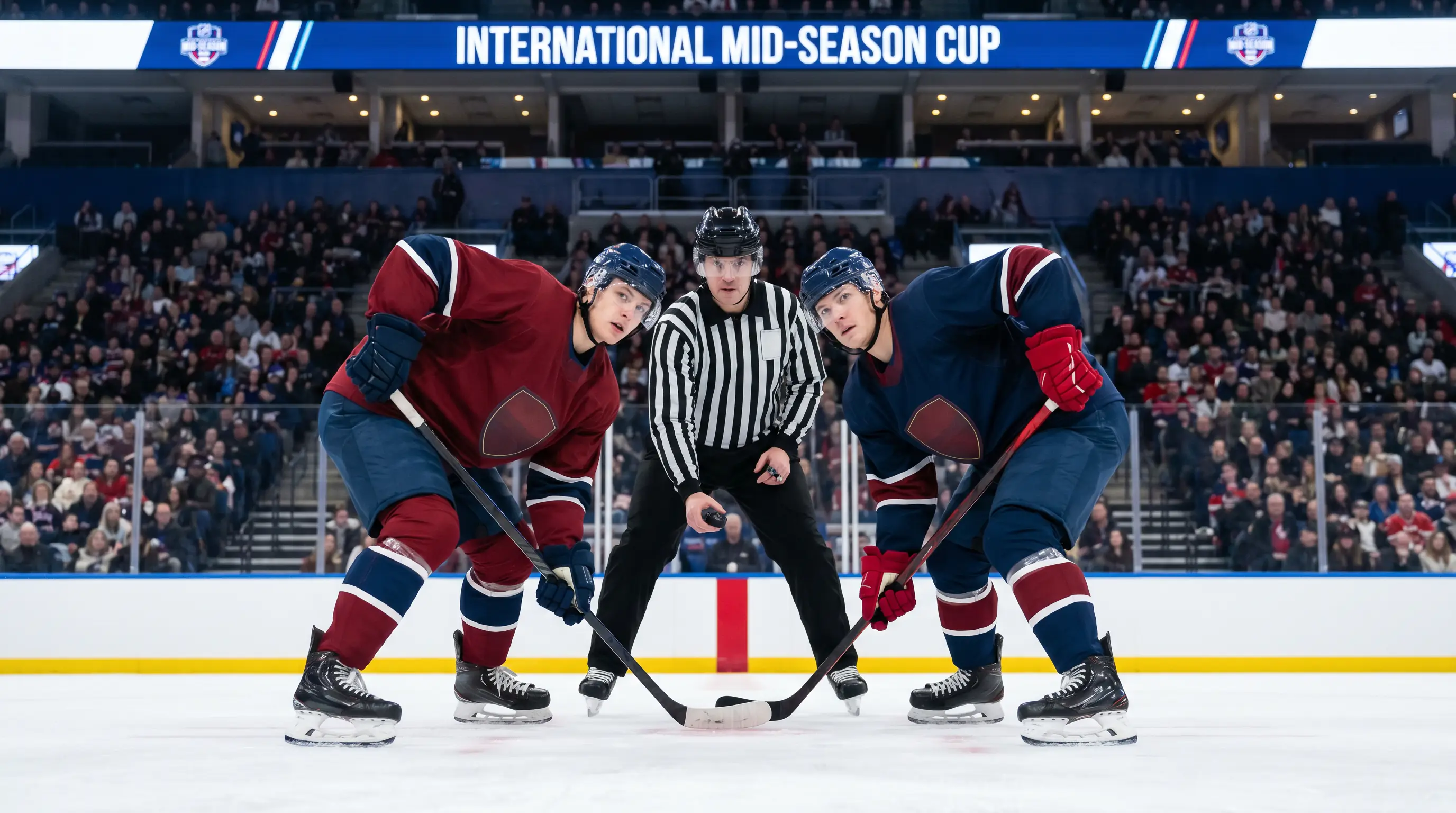
The implication for the round-robin betting: a team can lose two of three round-robin matches and still reach the final if their losses were both in overtime (earning one point each) and their win was in regulation (three points), totalling five points. Conversely, a team can win two of three matches and miss the final if those wins were in overtime (four points total) and their loss was in regulation. The points system creates non-linear paths to the final that the market doesn’t always price cleanly.
The single-game final is where the format’s variance peaks. After ten days of high-leverage round-robin matches against the deepest national rosters in the world, the final is a one-and-done showdown where goalie performance, single-shot variance, and tactical adjustments determine the outcome. The 4 Nations final is structurally closer to a Game 7 NHL playoff match than to any other tournament final in hockey.
North American axis versus European axis
The 4 Nations field divides naturally into the North American axis (USA, Canada) and the European axis (Sweden, Finland). Both axes have substantial NHL player pools, but the distribution and the structural advantages differ.
The North American axis benefits from cumulative NHL talent depth. The Florida Panthers won back-to-back Stanley Cups in 2024 and 2025, taking the 2025 Final against Edmonton in six games. The Canadian and American rosters draw from those Cup-winning environments, plus the broader NHL talent base. Connor McDavid posted 138 points in 2025-26 (90 assists, 48 goals); Nathan MacKinnon hit 53 goals in the same season. Both are central figures on the Canadian roster, and their NHL form translates directly into Canadian 4 Nations implied probability.
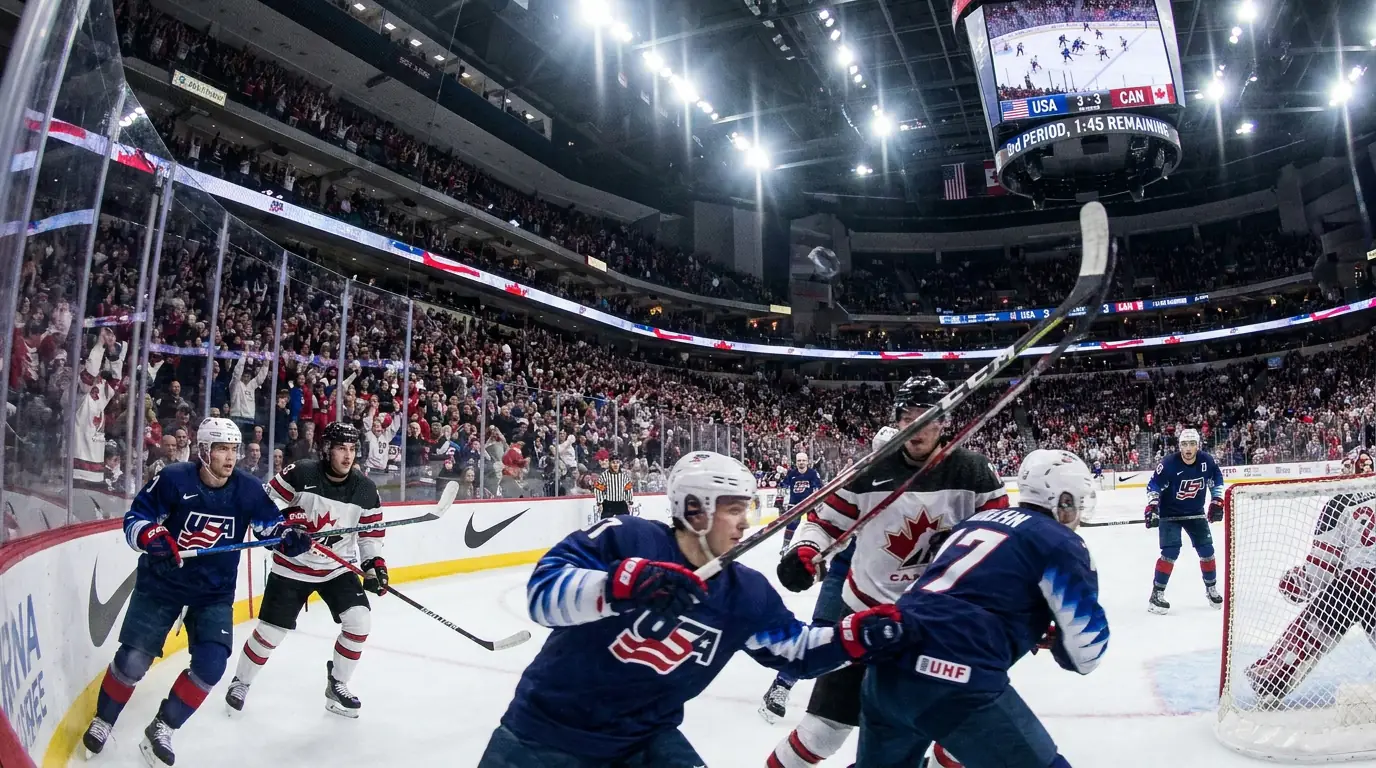
The European axis benefits from positional consistency. Sweden’s NHL goalie pool is unusually deep, with multiple starting-quality goalies available for the tournament. Finland’s defensive structure across NHL teams tends to be highly drilled, producing systematic strength on the penalty kill and in defensive zone play. The European axis doesn’t match the North American depth at top-line scoring but compensates through goalie strength and defensive sharpness.
The pre-tournament outright market typically prices Canada and USA in the 2.20-2.80 range each, with Sweden at 5.00-7.00 and Finland at 6.00-9.00. The combined implied probabilities for the North American axis runs 65-75%; for the European axis, 25-35%. Historical 4 Nations editions and analogous best-on-best tournaments (World Cup of Hockey 2016, Olympic editions) show the North American axis winning roughly 70-75% of the time. The market pricing is approximately accurate at the axis level.
The narrower bet is the specific match-up within axes. Canada vs USA round-robin matches are typically priced as pick-em or close to it, with the Canadian side at -110 to -120 across recent best-on-best editions. The Canadian moneyline is the structural value in this matchup — the Canadian roster depth slightly exceeds the American roster depth at the four-line level, and the implied probability of 53-55% under-rates the actual rate of 56-60%.
Sweden and Finland spoiler scenarios
The Swedish and Finnish chances to win the 4 Nations depend on specific scenarios that the market doesn’t always price cleanly. Sweden’s structural fit to a single-game final is sharpest when their starting goalie is running hot — the Swedish goalie pool can produce a tournament-best goalie performance that carries the team through the round-robin and into the final.
The SHL sits at the bottom of the major-hockey-league favourite-win-rate rankings at 59.04%. That domestic upset-rich environment doesn’t directly transfer to 4 Nations — Swedish NHL players are dramatically more talented than the SHL average — but the structural lesson is that Swedish hockey produces tighter, more competitive matches than the talent gap would suggest. Sweden in the 4 Nations final at +180 to +220 implies 31-36% win probability, against an estimated true probability of 33-42% depending on the specific final opponent. That’s marginal value, sharpest when the Swedish goalie is performing above his season SV% baseline.

Finland’s spoiler scenario is similar but with a different mechanism. Finland’s defensive structure across NHL teams (typically including 6-8 NHL defencemen at any time) translates into the most drilled penalty kill in the 4 Nations field. The PK strength suppresses opposing power-play opportunities, which is particularly valuable in single-game knockout matches where one power-play goal can decide the outcome. Finland at +200 to +260 in the final implies 28-33% win probability; estimated true probability runs 27-35% depending on the matchup.
The combined bet — “Sweden or Finland to win 4 Nations” — typically prices at +280 to +350, implying 22-26%. The actual combined rate across analogous best-on-best tournaments runs 22-30%. Approximately fair value, with marginal value cases on specific roster constructions.
Roster and injury news as line drivers
The save percentage environment matters for 4 Nations betting. NHL save percentage hit a 30-year low in 2024-25, league-wide. The 4 Nations features the best NHL goalies from each country, which means each team’s expected SV% sits substantially above the league average. The goalie selection — which starting goalie each coach picks for the round-robin matches and the final — is the single most market-moving piece of pre-match information.
The pattern that consistently shows: when a starting goalie is confirmed 90 minutes pre-match, the moneyline on that team shifts 0.10-0.25 decimal odds depending on the goalie’s relative quality versus the announced opponent’s starting goalie. UK punters tracking the goalie announcements through national hockey federation channels can take pre-confirmation lines on selections that subsequently move favourably.

Injury news drives similar moves. The 4 Nations runs during the NHL mid-season window, which means rosters can be affected by NHL injuries acquired in the matches immediately before the tournament. A top NHL defenceman ruled out 24-48 hours pre-tournament shifts the affected nation’s implied probability by 3-7 percentage points across the round-robin matches.
The structural takeaway: track roster and injury announcements aggressively in the pre-tournament window. The line movement on confirmed rosters is sharper than on pre-confirmation pricing, and the CLV opportunity is concentrated in the 24-72 hours before the first puck drop.
Market shape: 4 Nations vs Olympics vs Worlds
The three principal best-on-best (or near-best) tournaments have distinct market structures. The Olympic tournament features 12 nations with a wider competitive field. The senior IIHF Worlds features more nations still (16) with the broadest competitive distribution. The 4 Nations features only the four nations with the deepest NHL talent pools.
IIHF Worlds 2026 in Switzerland produced 466,314 spectators across 64 matches with Finland winning their fifth title at 5.8 goals per match average. IIHF Worlds 2025 in Sweden and Denmark produced 489,450 spectators across 64 matches with USA winning their third title at 5.83 goals per match average. The 4 Nations matches average closer to 6.0-6.5 goals per match because the concentrated talent produces faster pace and more offensive zone time.

The implication for totals betting: the 5.5 total Under at -110 in 4 Nations matches has historically hit at 50-54%, against an implied 52-54%. Approximately fair value. The 6.5 total Over at -120 implies 56-58%; actual rate runs 52-56%. Approximately fair to slightly under-priced.
The moneyline patterns also shift. In 4 Nations round-robin matches, heavy favourites are rare — every matchup is between two of the four deepest national pools, and the implied probabilities cluster between 35% and 65% for the favourite. The market is competitive across all six round-robin matches. The structural value is in the specific match-ups where the goalie or roster news creates pre-confirmation pricing inefficiencies. The cleanest cross-tournament integration, particularly between WJC prospects and the broader best-on-best player pipeline, sits in international tournament context across IIHF and NHL formats.
Frequently asked questions
Two questions UK punters ask about the 4 Nations Face-Off come up most often. Both touch the tournament’s distinct structural position in the international hockey calendar.

What is the 4 Nations Face-Off and how does it differ from All-Star Weekend?
The 4 Nations Face-Off is an NHL-organised mid-season tournament introduced in 2025 to replace the All-Star Weekend. It features USA, Canada, Sweden, and Finland in a round-robin plus single-game final format played across roughly ten days during the NHL mid-season break. All players are current NHL professionals, which makes the tournament the most concentrated best-on-best hockey event in the calendar. The differences from All-Star Weekend are structural — the 4 Nations features competitive national-team matches with regular hockey rules, scoring, and pace, while All-Star Weekend featured exhibition skills competitions and three-on-three matches with relaxed rules. The 4 Nations counts as official NHL-sanctioned competition rather than entertainment programming.
Are 4 Nations matches counted as NHL games for player stats?
No. 4 Nations Face-Off matches are international competition events organised by the NHL but not counted in NHL regular-season or playoff statistics. Goals, assists, and other player metrics from 4 Nations matches appear in international competition records, not in the player’s NHL career totals. The same applies to Olympic matches and IIHF Worlds matches — they’re separately tracked as international competition statistics. For betting purposes, the most important implication is that injury news from 4 Nations matches can affect subsequent NHL regular-season availability, since players returning to their NHL clubs after the tournament carry any tournament-related injuries with them into the resumed NHL schedule.
