
 Available in US
Content

The hardest discipline isn’t picking winners
I’ve watched competent punters bleed bankrolls because they couldn’t size stakes properly. The picks were fine. The variance handling wasn’t. UK males aged 18-24 have the highest non-lottery gambling participation rate at 47% — and the same group is the highest-risk for problem gambling patterns. Bankroll management isn’t a peripheral concept for hockey punters. It’s the structural difference between a sustainable hobby and a destructive one.
This piece is about hockey-specific stake sizing, not generic betting theory. NHL throws variance at you that football doesn’t — 12-15 games on a Saturday slate, overtime and shootout outcomes that flip moneylines on a coin-flip event, late-night puck drops that stretch UK punters into 2am cash-out decisions. The rules below are the ones I’ve found durable across years of running my own logs. They’re not exotic. They are explicit.
Defining a hockey bankroll unit
A unit is one percentage point of your dedicated hockey bankroll. The bankroll is money you’ve set aside specifically for hockey betting — not your overall savings, not your monthly income, not a credit-card buffer. It’s a separate, discrete number you can lose entirely without affecting rent, bills, or non-discretionary spending. That separation is the foundation of every stake-sizing decision underneath.
The size of the bankroll depends on what you can afford and what you’re trying to achieve. A casual UK punter might run a £200-£500 hockey bankroll across a season. A more committed punter might allocate £1,000-£2,500. The actual figure matters less than the principle: the bankroll is a closed system. You don’t add money mid-season to chase losses. You don’t withdraw winnings mid-season to spend on something else (unless the bankroll has grown well above your starting point and you’re locking in a structural profit). The closed system makes the variance manageable because every loss is a defined percentage of a defined total.

One unit is 1% of the bankroll. A £500 bankroll has units of £5. A £1,500 bankroll has units of £15. Standard plays are 1-2 units. Strong plays — where you have a clear data-driven edge — are 2-3 units. Speculative plays, longshots, or props where your conviction is real but the edge is harder to quantify, are 0.5-1 unit. The structure means even a brutal losing streak — 10-15 consecutive losses, which happens — eats 10-30 units, or 10-30% of the bankroll. That’s recoverable. A streak that costs 60-70% of the bankroll is almost impossible to recover from psychologically.
Flat staking, percentage staking, and the Kelly criterion
Three staking systems dominate the literature. Each has structural trade-offs that matter in hockey specifically.
Flat staking is the simplest. You stake the same amount on every play — say, £10 per bet regardless of odds or perceived edge. The advantage is psychological: it removes stake-sizing as a variable, lets you focus on pick quality, and prevents the trap of doubling stakes after losses. The disadvantage is the lack of edge weighting — strong plays and weak plays get the same exposure, which under-uses your conviction signal.

Percentage staking adjusts the bet size to the bankroll. As the bankroll grows, the unit size grows. As the bankroll shrinks, the unit size shrinks proportionally. This system protects against ruin because each stake is always 1-2% of current bankroll, regardless of streak. The disadvantage is that it can mask underperformance — a bankroll quietly shrinking from £500 to £350 still feels like normal play because each stake is “1%” of whatever the current number is.
The Kelly criterion is the mathematically optimal system if you can accurately estimate your edge on each bet. The formula: stake = (probability × decimal odds – 1) / (decimal odds – 1), expressed as a fraction of bankroll. The trouble for hockey punters is that probability estimation is hard and tends to be over-optimistic. Full Kelly assumes you know your edge precisely. If you over-estimate by even 5 percentage points (thinking you have a 55% chance when you actually have 50%), Kelly tells you to stake aggressively into a coin-flip and the long-run result is bankroll destruction. The conservative compromise is fractional Kelly — quarter or half Kelly — which under-stakes deliberately and reduces ruin risk while preserving most of the long-term growth advantage.
My own approach: percentage staking with a fixed unit at 1% of starting bankroll, recalculated quarterly, with manual upgrades to 2-3 units for plays where my conviction is clearly above baseline (data-driven, written-down reasoning, not a hunch). That blend captures most of the benefits of all three systems without leaning too heavily on edge estimation.
Variance on busy NHL slates
Saturday NHL slates routinely run 12-15 games. A punter with views on 8-10 of those matches faces a compounded variance problem. If each pick has a 55% win probability and you place eight 1-unit bets, the math says you’ll win 4-5 of them on average. But the distribution around that average is wide: a 2-6 night happens about 11% of the time, and a 1-7 night about 4% of the time. Across a season, you’ll have multiple Saturday slates where you go 2-6 or worse despite picks being structurally sound.
The B2B-fade subset is a useful illustration. NHL teams playing the second leg of a B2B have gone 205-309 SU since 2023, about 40%. A punter fading every qualifying B2B-second-leg team would have approximately a 60% hit rate on individual bets. But across a 14-day stretch where eight or nine B2B fades line up, a 4-5 record is possible even when the underlying edge is real. That’s normal variance, not a system failure.
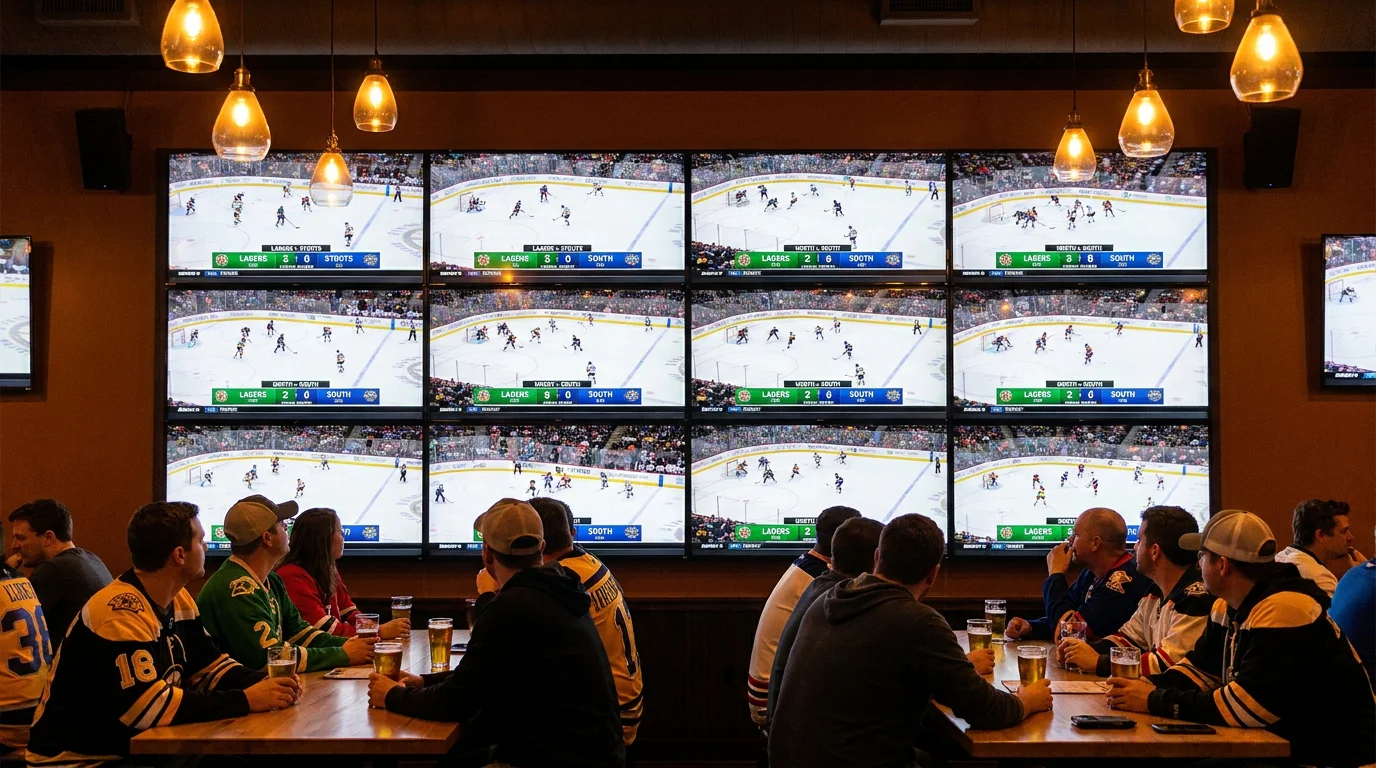
The discipline rule that handles this: cap total exposure per night at 8% of bankroll. If you have ten qualifying plays at 1% each, that’s 10% of bankroll exposed in a single 24-hour window. Over-exposure means a bad night can knock the bankroll back enough to make recovery slow. Cap the exposure, take the best 6-8 plays by conviction, and skip the marginal ones. Discipline on what you don’t bet matters as much as discipline on what you do bet.
Tracking bets and ROI by market
Untracked betting is invisible betting. You’ll remember the wins, forget the losses, and convince yourself your hit rate is 55-60% when the records would show 48%. Every serious hockey punter I know runs a tracking sheet. The minimum columns: date, sport, market, selection, stake (in units), price, result, P/L in units, running bankroll, notes.
The value of the spreadsheet isn’t the tracking itself. It’s the segmentation. Sort your last 100 bets by market type. NHL moneyline at -150 or shorter: what’s your hit rate, what’s your ROI? Empty-net puck-line plays: what’s your hit rate? B2B fades against specific divisional matchups: what’s your ROI compared to other B2B subsets? The patterns that emerge are the actual edge map of your betting. Markets where you’re consistently positive are markets to weight more heavily. Markets where you’re flat or losing are markets to scale back or eliminate.

One specific habit: log the closing line for every bet you place pre-game. The closing line is the final price before puck drop. If you consistently beat the closing line — taking +120 on a team that closes at +105, for instance — you’re capturing measurable value, even if individual bets lose. CLV (closing line value) is the leading indicator of long-term profitability in hockey, more predictive than short-run ROI because it’s less affected by variance. Tracking CLV alongside ROI gives you a more honest read on whether your selection process is actually generating edge or just running hot. The detailed walk-through of CLV calculation and tracking lives in the broader piece on pairing stake discipline with CLV tracking.
UK safer-gambling tools you should already have configured
The Gambling Survey for Great Britain reports that approximately 2.7% of UK adults — around 1.4 million people — score 8+ on the Problem Gambling Severity Index, indicating moderate-to-severe gambling harms. UK males have a sports-betting participation rate of 15-17% versus around 4% for women, and the 18-24 male cohort sits at the highest risk profile of any group.
The tools that protect against the drift from disciplined hobby to harmful pattern are built into every UKGC-licensed operator and into the broader regulatory framework. The non-negotiables, in my view, are deposit limits, loss limits, and session limits, configured before you place a single bet on the account. Set deposit limits to the bankroll amount you’ve defined. Set session limits to 60-90 minutes maximum. Set loss limits to a level that triggers a forced cool-off before you can exceed it. The friction these tools introduce is the point — when a normal session goes wrong, the tools force you to step away rather than chase.
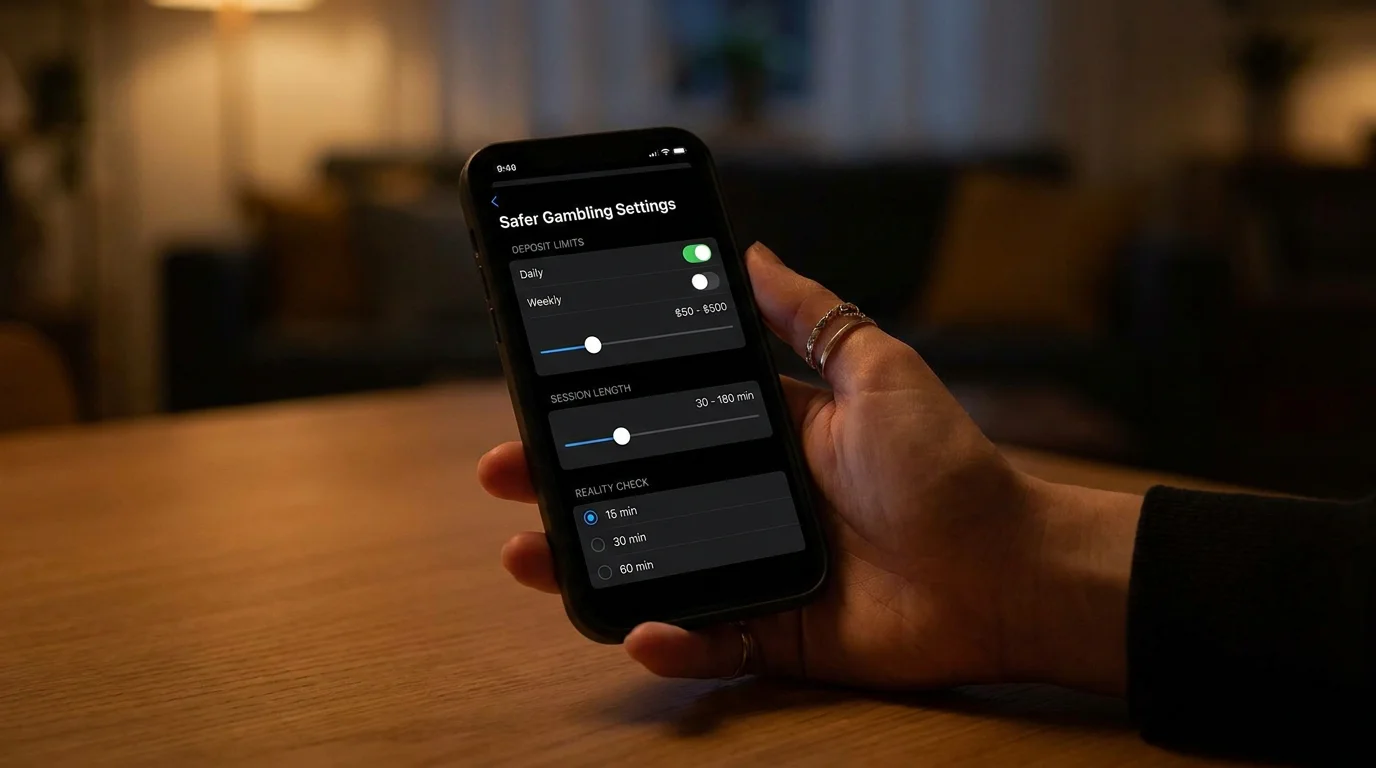
The second layer is the external resources. GAMSTOP is the UK-wide self-exclusion scheme covering all UKGC-licensed operators. GamCare runs the National Gambling Helpline, free and confidential, 24/7. BeGambleAware provides information, support, and links to NHS Northern Gambling Service for clinical referrals when needed. Configuring deposit limits and session limits is preventative. Reaching out to GamCare or GAMSTOP when patterns become unmanageable is restorative. Both layers should be available to every UK punter, and there should be no embarrassment in using them. The data on the risk profile of male 18-24 punters is too sharp to ignore.
Frequently asked questions
Three questions punters bring to me about stake sizing and bankroll discipline. The third one matters more than the first two in any UK conversation about responsible betting.

What stake percentage works best for UK hockey punters?
One to two percent of bankroll per play is the durable answer. At 1% on standard plays and 2-3% on high-conviction plays, the bankroll absorbs normal variance — including the inevitable losing streaks of 10-15 consecutive losses that happen across a season — without requiring desperate recovery decisions. Stakes above 5% per play scale variance to levels where a single bad week can wipe 30-40% of the bankroll, which is psychologically very difficult to recover from. Stakes below 0.5% don’t generate meaningful return even on positive expected-value plays. The 1-2% range balances growth potential against ruin risk for the typical UK punter running a £500-£2,500 hockey bankroll.
How does Kelly criterion translate to hockey moneylines?
Kelly criterion calculates optimal stake as (your estimated probability multiplied by decimal odds, minus 1, divided by decimal odds minus 1), expressed as a fraction of bankroll. For a hockey moneyline at 2.10 where you estimate a 52% chance of winning, Kelly says stake 5% of bankroll. The structural problem is that hockey probability estimation is hard and tends toward over-optimism. Most punters who think they have a 55% edge actually have a 50-52% edge once variance is accounted for. Full Kelly applied to over-estimated edges leads to ruin. Quarter Kelly or half Kelly — staking 25-50% of what the formula suggests — preserves most of the long-run growth while sharply reducing ruin risk, which is the right compromise for almost all UK punters.
Where can a UK punter set deposit and session limits?
Every UKGC-licensed operator must offer deposit limits, loss limits, session limits, and self-exclusion options directly within the account settings. The standard path is the responsible-gambling or safer-gambling section of the account dashboard, where limits can be set immediately and increases require a 24-72 hour cool-off depending on the operator. For UK-wide self-exclusion across all licensed operators simultaneously, GAMSTOP is the registry to use — it covers the full licensed market with a single registration. GamCare runs the National Gambling Helpline 24/7 and BeGambleAware provides additional support resources. Configuring limits before betting begins is more effective than waiting for problems to emerge.
